7 Group Coaching Program Mistakes That Cost You Clients (And How to Fix Each One)
your coach

You ran the program. People showed up, at first. Then the second call had fewer faces, the third had a lot of "something came up," and by the final session you were coaching a room of three and a spreadsheet of refund requests. You are not alone in this, and it is almost never about your coaching skill. It is about structure.
Most group coaching problems start long before the first session. They start in how you designed the container, how you sold it, and how you handled the small, boring details that make people feel safe enough to stay. Below are the seven most common group coaching program mistakes I see coaches make, and the specific fix for each one. You can act on most of these before your next session, without rebuilding everything from scratch.
Why group coaching programs lose people even when the coaching is good
One-on-one clients stay because of the relationship with you. Group clients stay because of the relationship with the group and with their own progress. If either of those is weak, they leave, and they usually leave quietly. You find out when they stop replying to your emails.
This matters more for entrepreneurs than for most audiences. Your clients are running businesses. Their calendar is a resource they fight for, their attention is fragmented, and any group experience that feels like passive learning rather than measurable movement will be the first thing cut when a bad week hits.
So the fixes below are all in service of two outcomes: clarity of what they are getting, and evidence of what they are gaining.
Mistake 1: Selling the program as a list of sessions instead of a change
The sales page says "eight weekly calls, a workbook, and a private community." That is a description of your delivery, not a promise of what changes for your client.
An entrepreneur reading that has one question: what will I be able to do, decide, or stop doing by the end? If the answer is not obvious within a few seconds, they will buy something that promises a result instead.
The fix: write the outcome sentence before you write the curriculum
Take a page and finish this sentence in plain language: "By the end of this program, you will have ___." Not "you will learn" and not "you will understand." Have.
Some examples of the difference:
- Weak: "You will learn how to build confidence as a founder."
- Stronger: "By the end of eight weeks, you will have a written decision filter for the three calls you keep second-guessing, and you will have used it in live conversations with two clients."
Then reverse engineer. Every session title should connect to a piece of that outcome sentence. If a session does not connect, either cut it or move it to a bonus. When you present the program, lead with the outcome sentence, then the modules, then the mechanics.
One quick test: read your program description out loud and ask whether a stranger could describe the result to a friend in one sentence. If they would only be able to describe the format, rewrite.
Mistake 2: Filling the group without any filter
Group chemistry is not luck. It is selection.
A group where one person is pre-revenue and another is running a seven-figure team can work, but not by accident. It works when you set the expectation that experience levels differ and everyone is responsible for translating the material to their own stage. It fails when the seasoned founder dominates the call and the newer founder goes quiet.
The fix: add one qualifying question and one group agreement
The qualifying question, asked on the application form: "What is the specific business decision you are sitting on right now, and what makes it hard?" Their answer tells you whether they are in the right container, and it gives you the first coaching move on day one.

The group agreement, sent before the first call and restated in the first five minutes:
- Everyone's stage is different, and that is useful.
- No advice-giving in the chat. Questions and experiences only.
- What is shared here stays here.
- If you are stuck, say so out loud. Silence is not learning.
Keep it to four lines. Longer agreements do not get read.
Mistake 3: Hiding the size of the commitment
If the program is described as "live coaching each week" and participants discover there are also two unlisted training modules, a partner exercise, and a monthly review call, you have created the feeling of being trapped. Trapped people disengage, then disappear.
Ambiguity about time is one of the highest-cost group coaching program mistakes because it erodes trust before the coaching has done anything for them.
The fix: publish a weekly time budget and stick to it
Give them a single number for the total weekly commitment and break it down. Then hold yourself to it. If you go over, that is your problem to manage, not theirs to absorb.
| Program element | Suggested weekly time | When it happens |
|---|---|---|
| Live group coaching call | 75 minutes | Same day and time each week |
| Short training module | 15 minutes, video, under a week | Released Monday morning |
| Peer accountability pairing | 20 minutes | Agreed between pairs |
| One written reflection | 10 minutes | Submitted before the call |
| Total | 2 hours per week | Consistent across all weeks |
Two hours a week is a real boundary. It is also a promise. When you hold it, participants stop bracing for surprise homework and start planning their week around the program.
If you find yourself wanting to add something mid-program, add it to the following cohort instead. Mid-program additions almost always read as a burden, even when they are a gift.
Mistake 4: Running calls as a lecture with questions at the end
This is the quiet killer. You plan brilliant content, you deliver it for forty minutes, and you leave fifteen minutes for questions. Three people ask a polite question and the call ends.
Your participants came for coaching, not for a webinar they paid for in advance. The moment a call feels like content delivery, the perceived value drops, because they can get content anywhere for free.
The fix: flip the ratio and start with the work
Try this structure for a 75 minute call, and keep it for every week so participants know what to expect:
- Minutes 0 to 10: Each person shares one sentence about the action they took since last week and one thing they are stuck on. You are collecting material, not solving yet.
- Minutes 10 to 20: A short teaching block, no more than ten minutes, drawn from what the room actually needs.
- Minutes 20 to 65: Live coaching on two or three real situations, with the rest of the group contributing questions and observations. This is where the value lives.
- Minutes 65 to 75: Each person states one specific action and when they will do it. You write these down.
Here is an example of what that looks like in practice. A participant says she keeps postponing a pricing conversation with a long-term client. Instead of answering for her, you ask two questions: what are you afraid will happen, and what is the smallest version of this conversation you could have on Thursday? She leaves with a plan for a ten-minute call, and the rest of the group watches a real coaching conversation happen. That demonstration teaches more than any slide you could prepare.
Mistake 5: Letting silence fill the space after a breakthrough
When someone in your group has a real moment, an admission, a decision, a plan they have been avoiding for months, the instinct is to move on quickly to keep things efficient.
Moving on too fast is a mistake because the breakthrough is not the insight. The breakthrough is the group hearing a peer name something true. If you rush past it, the group learns that vulnerability is transactional and quiet people stay quiet.
The moment a participant says something true in front of the group, slow down. The room is watching to see whether honesty is safe here. Your answer in that moment sets the price of speaking up for the rest of the program.
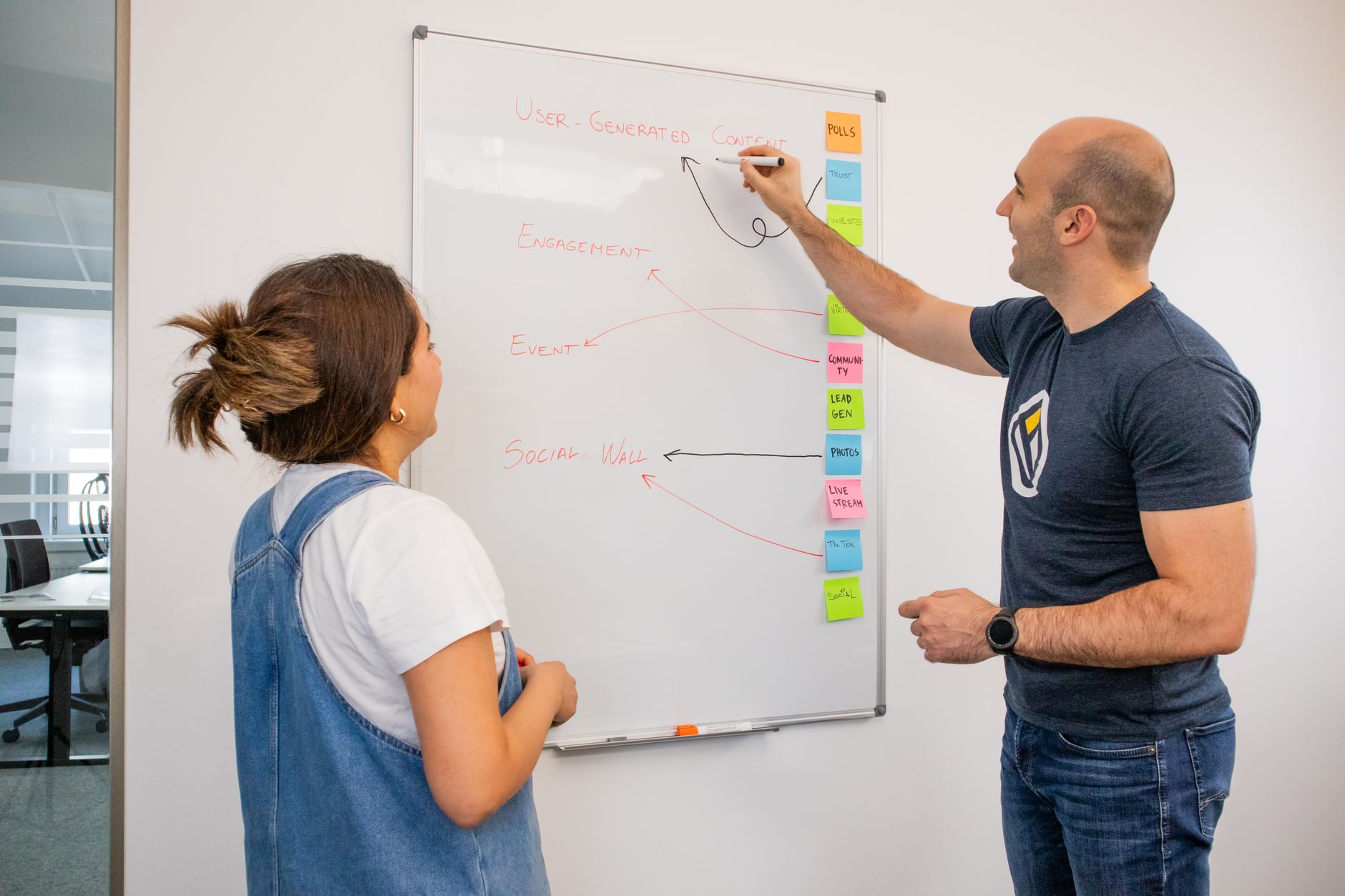
The fix: name it, credit the group, and connect it forward
Three short moves, about ninety seconds total:
- Name it: "What you just said matters. Say the last part again."
- Credit the group: "That came out of what the group asked you, not me."
- Connect it forward: "Who else recognized themselves in that?"
That last question is where retention comes from. When a participant can point to a moment where a peer's honesty moved them forward, they stop evaluating the program week by week and start protecting it.
Mistake 6: Measuring attendance instead of momentum
Attendance is the easiest thing to track and one of the least useful metrics on its own. A participant can show up to every call, nod, say nothing, and quietly decide the program was not worth it. Meanwhile, someone who missed two calls may have made a business decision that changed their quarter.
The fix: track three numbers, not one
Keep a simple one-row-per-participant sheet and update it after each session:
- Actions declared: Did they name a specific next step and a date? Count it as yes or no.
- Actions landed: Ask in the first ten minutes of the next call. Did the step actually happen, or did it shift?
- Clarity rating: On a scale of one to five, how clear are they on their next business decision? Ask this at session two and at session six. The change matters more than the number.
When someone declares an action three weeks running and never lands it, that is your early warning sign. Reach out individually within a day or two. Usually there is a specific obstacle, a pricing fear, an awkward partner conversation, an overcommitment, and it can be handled in ten minutes before it becomes a refund conversation.
This is also the material for your own debrief. If six of eight participants are unclear on their next decision after three sessions, the curriculum has a problem, not the participants.
Mistake 7: Ending the program in the last live call
The final call is usually celebratory, warm, and the last real contact. Then the alumni group becomes a graveyard of one-off messages and everyone drifts.
For a coaching business based on retaining clients, this is the most expensive mistake on the list. Your happiest participants are your best source of the next cohort, and they forget you within about a month unless there is a deliberate reason to stay in touch.
The fix: build the bridge before the last call
Three concrete moves, each small:
- Session five: Ask each participant to write their own next-quarter objective in one sentence and share it in the chat. You now have a documented reason to follow up.
- Session seven: Send a short alumni invitation. One optional monthly call, first Thursday, thirty minutes, no homework. Keep the barrier low.
- Four weeks after the program ends: Send one personal message referencing the objective they wrote in session five. "You said you wanted to raise your base rate by March. Where has that landed?"
That single message is not a sales pitch. It is proof that you paid attention. When they are ready for the next step, and some will not be for months, they will think of you first because you were the coach who remembered.
How to run a one-hour fix before your next session
You do not need to rebuild the whole program. Set aside one hour and work through these in order.
- Ten minutes: Write your outcome sentence. "By the end of this program, you will have ___."
- Ten minutes: Open your last session plan and check whether each segment maps to that sentence. Cut or move anything that does not.
- Ten minutes: Write your weekly time budget in one line with a total. Publish it to the group today.
- Ten minutes: Rewrite your call agenda using the 10 / 10 / 45 / 10 structure.
- Ten minutes: Open your participant sheet and add the three tracking columns: actions declared, actions landed, clarity rating.
- Ten minutes: Draft your alumni message and your four-week follow-up template, and schedule the follow-up before you forget.
One hour, six edits. Most of these can be made mid-cohort without confusion, as long as you explain the change in plain language: "I am tightening the structure so you get more coaching time and less homework."
What actually keeps clients in a group program
Confidence and clarity, the two things you promise, are built through evidence. Participants become confident when they take actions that work. They become clear when the group asks them questions that sharpen their thinking. Your job is to build the structure that makes both of those likely every single week.
The coaches who retain clients are not necessarily the most charismatic ones. They are the ones whose participants can point to a specific decision they made, a specific conversation they had, and a specific person in the group who helped them get there. When someone can tell that story, they renew. When they cannot, they leave politely and say the timing was not right.
Start with the outcome sentence and the time budget. Those two fixes alone will change how the next cohort talks about your program, and how quickly they tell someone else about it.